




SPORTS MASSAGE
 SPORTS MASSAGE is defined as “A collection of massage techniques performed on athlete or active individuals for the purpose of aiding recovery or treating pathology”
Massage helps alleviate the stress and tension which builds up in the body’s soft tissues during physical activity. It can help prevent niggling injuries that can get in the way of performance whether you are an athlete, a regular gym based exerciser or an occasional jogger.
Anyone can benefit from Sports Massage, not just the sports person. We regularly treat clients in physically demanding jobs such as builders, decorators, gardners as well as those who have less physically demanding jobs but who suffer with occupational, emotional and postural stress that may produce aches and pains similar to sports injuries.
JOINT MOBILSATIONS
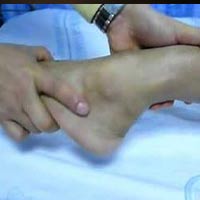 JOINT MOBILSATIONS “is a manual therapy intervention, a type of passive movement of a skeletal joint. It is usually aimed at a target synovial joint with the aim of achieving a therapeutic effect.
These type of mobilisations are used to increase the range of motion and mobility of a joint. Our therapists will position you to allow them to take your effected joint through its full range of potential movement to help the joint relax and aim to achieve an improved range of movement.
KINESEO TAPING
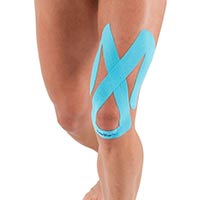 KINESEO TAPING a therapeutic taping technique which supports joints and muscles without restricting range of motion as well as having benefits for the lymphatic system. This type of taping technique can be used to treat sports and non-sports injurires, including back pain, runner’s knee, plantar faciitis, the tape can be used to support a joint following injury, promote blood, lymph and oxygen flow to muscles so aiding there recovery, facilitate or inhibit muscle functionalily.
ATHLETIC STRAPPING
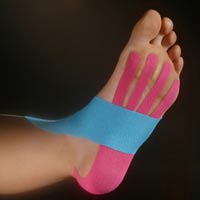 ATHLETIC STRAPPING is the use of bandaging and strapping to help prevent unwanted movements of injured musculo-skeletal structures. Strapping or other supportive measures are used to restrict or completely immobilize joint movements. This allows the client to perform controlled, progressively remedial exercises without aggravating the injury.
REFLEXOLOGY
REFLEXOLOGY
The underlying theory behind reflexology is that there are certain points or "reflex areas" on the feet and hands that are connected energetically to specific organs and body parts through energy channels in the body.
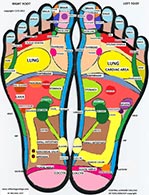 By applying pressure to reflex areas, a reflexologist is said to remove energy blockages and promote health in the related body area. Here are some examples of reflex areas and their corresponding body parts:
- The tips of the toes reflect the head
- The heart and chest are around the ball of the foot
- The liver, pancreas, and kidney are in the arch of the foot
- Low back and intestines are towards the heel
Although the roots of reflexology go back to ancient Egypt and China, William H. Fitzgerald, an ear, nose, and throat doctor, introduced this concept of "zone therapy" in 1915. American physiotherapist Eunice Ingram further developed the zone theory in the 1930s into what is known as modern reflexology.